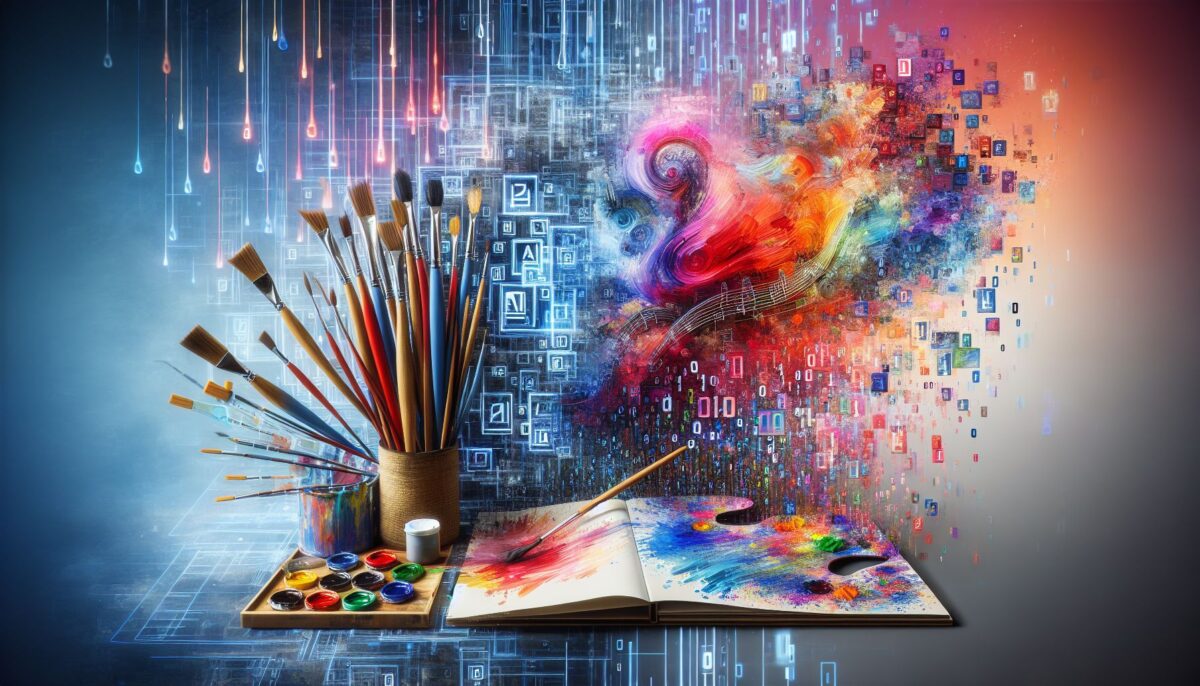
Hey friends, fellow tech enthusiasts, and accidental lurkers! Today, I’m diving headfirst into the fascinating and somewhat fantastical world of artificial intelligence and how it’s changing creative arts. As someone who’s a sucker for a good painting and an even bigger sucker for how machines mimic our human quirks, this topic is right in my wheelhouse. So grab a cup of whatever keeps you jazzed, and let’s explore this wild intersection of art and algorithms.
The New Renaissance: Machines Take Up the Brush
Long gone are the days when computers were bulky machines confined to coding and calculation dungeons. AI has now grown arms (metaphorically, albeit) and is dabbling in creative enterprises that used to be our exclusive domain. When I stumbled upon digital paintings created by AI for the first time, my immediate thought was, “Does the AI ponder existential crises while painting a sunset too?”
To answer my own musing: Maybe not yet, but the results sure are impressive. Algorithms like OpenAI’s DALL-E and Google’s DeepDream have given us a peek into what machines can create when fed with artistic intent and a generous helping of neural network magic. People say we’re living through the Fourth Industrial Revolution, and if AI-generated masterpieces are part of the deal, sign me up!
The Magic (or Algorithm) Behind the Curtain
You might wonder how a collection of code mimics an artist with years of painting experience. Well, spoiler alert: It’s not witchcraft, though it feels like it. Most art-generating algorithms use neural networks trained on mounds of data. Think centuries-worth of art from all the greats (and no, that’s not an oxymoron). These networks learn styles, color palettes, even brush techniques by processing these images ad infinitum.
Generative Adversarial Networks (GANs) play an important part here. Imagine two AI artists locked in a creative duel. A “generator” network creates art while a “discriminator” network critiques it. Over time, the generator becomes so skilled at its craft, it’s almost indistinguishable from a human’s work. I know, I know, it’s like robots playing Pictionary, but they’re darn good at it!
Virtual Brushes, Real-World Impact
Changing the Art Market—or Just Shaking It Up?
Of course, AI’s growing presence in the art world isn’t just about creating cool stuff. It’s a philosophical and economic shake-up. Have you heard of the AI artwork that sold for a whopping $432,500 at Christie’s? Yes, I’m talking about “Portrait of Edmond de Belamy,” a piece generated by an algorithm trained by Paris-based collective Obvious. The AI’s signature? A fragment of the GAN model’s loss function. Geeky chic, right?
This sale sparked debates about the value of AI art and whether AI can genuinely be described as a creator or just a tool. And let’s not skip the ethical quandaries: Are these algorithm-generated works theirs, or do they belong to the designers and trainers behind them? Your guess is as good as mine, and I majored in computer science, not art philosophy!
Collaborations: Art as Co-Creation
Apart from stand-alone works, AI has evolved into a collaborator, helping artists enhance their creativity. Imagine you’re an artist looking for unique patterns. AI can suggest fascinating iterations that prompt new ideas, a virtual muse if you will (minus the Greek toga and lyre). This collaboration invites even the most traditional artists into a new arena where the creative process gets celebrated, multiplied, and yes, commercialized all the same.
The Brushstrokes of Tomorrow—What Lies Ahead?
The Horizon of Generative Art
With AI painting, composing music, writing poems, and even scripting movies, who knows where we’re headed next? Speculating the future? With pleasure! Let’s imagine an art studio where a personalized AI assistant helps manage mundane tasks, optimize brushstrokes, or even predict art trends based on global data. The creative possibilities are exciting, but they’re just as daunting.
Sure, we might face debates about originality and authorship, but isn’t that what art historians have mused over since time immemorial? Just think of AI as the avant-garde artist of this century, challenging perceptions and crafting new narratives, whether in a Memphis coffee shop or a well-heeled Parisian gallery.
Challenges in the Artist-AI Paradigm
Let’s not ignore the hurdles AI art faces. Most critically, the ethical paradigms and ownership concerns I mentioned earlier still need solving. As programmers and artists tap dance through legal, cultural, and philosophical complexities, it’s captivating to imagine the incredible art and intense debates yet to come. Even the role of art critics could evolve, transitioning from layman appraisal to detailed discussions on algorithmic intention.
The Symphony of Science and Creativity
I’d like to believe that as long as we embrace AI in creative arts like a tool and not a tyrant, the symphony of science and creativity will echo through our shared history. While AI won’t be getting any art credentials from Yale anytime soon (or will it?), it undeniably works as a muse, partner, and even provocateur, pushing the boundaries of visual art and creative expression.
So here we stand at this exceptional crossroad, a new kind of artistic revolution. It’s happening right now, and it’s only getting started. And isn’t that a wildly thrilling thought? I, for one, am keen to see the kaleidoscope of color splashed across digital canvases just as much as the pages of my favorite New Yorker magazine.
Let me know what you think about AI and its role in creative art in the comments below. Do you think it’s brushing greatness or merely dabbling? Either way, it’s an exciting time to be alive and geeking out over art.
