The Results That Surprised Almost Nobody (And Everyone)
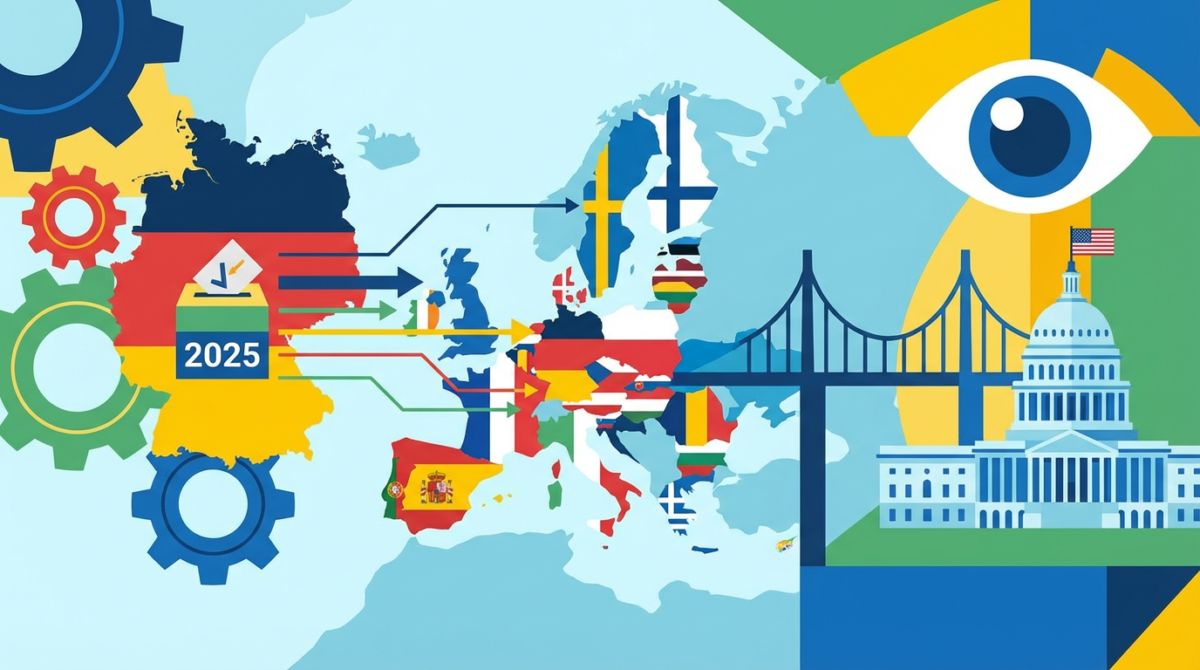
On February 23, 2025, Germans voted. The Christian Democrats under Friedrich Merz won with roughly 28.6% of the vote, securing the chancellor’s seat. This wasn’t a shock. But here’s what should grab your attention: the runner-up came in at about 20.8% of the vote. That runner-up was the AfD, Germany’s far-right party, posting its strongest federal performance ever. This combination tells you something crucial about the state of European democracy right now.
The Socialist Democrats cratered. The SPD pulled in around 16.4%, marking their worst federal result since World War II. That’s not exaggeration. That’s historical. If you want to understand what’s happening in Europe’s largest economy, start there. The traditional center-left party that shaped postwar German politics just lost more than half its support compared to the previous election.
For verified details on the exact vote totals and seat distributions, Official German Federal Returning Officer Results provides the official data. It’s the kind of primary source that cuts through commentary and lets you see the numbers themselves.
The Structural Constraints That Actually Run the Show
Here’s where American readers need to pay attention. Germany’s new government doesn’t get to just spend its way out of problems like some democratic systems can. There’s a constitutional debt brake that limits new borrowing to 0.35% of GDP. That’s not a policy preference. That’s a constitutional requirement. Now imagine you won an election and immediately discovered you’re bound by rules that severely limit your fiscal flexibility. That’s Merz’s reality.
This creates real tensions fast. Europe faces genuine challenges: military spending needs are rising because of the security situation in Ukraine. Infrastructure requires investment. Social programs have constituencies. But the money available is constrained by constitutional law. This isn’t a temporary budget issue. It’s structural gridlock baked into the system itself. When voters choose a new government expecting change, and that government discovers it has limited tools to deliver, frustration doesn’t take long to build.
Meanwhile, the Bundestag itself got smaller. After electoral reforms, the parliament now has 630 seats instead of the 736 it had before. That’s the smallest parliament in decades. Fewer seats means less legislative flexibility, more consolidated power, and potentially less representation of diverse viewpoints.
Why the AfD’s Second-Place Finish Is the Real Story
Don’t get distracted by Merz winning. The actual story is that a party most mainstream German political leaders won’t work with just secured 20.8% of the vote. The AfD remains toxic for coalition purposes. No major party will partner with them. But they’re too big to ignore, and their voters clearly feel something that existing parties aren’t addressing. That’s the pattern across Europe and increasingly in the United States too: voters choosing outsider parties not because those parties are competent, but because voters feel abandoned by established alternatives.
This creates a specific problem. You have growing electoral strength for a party that’s systematically excluded from power. That’s politically volatile. People don’t stay patient when they vote for someone and that someone gets locked out of decision-making. They either disengage or push harder. Neither outcome strengthens democratic institutions.
What This Means for American Politics
You might be wondering why German election results matter if you’re focused on American politics. Here’s the practical answer. Germany is the economic engine of Europe. It’s NATO’s largest European member. It’s a critical partner on everything from trade to security. When Germany’s political center destabilizes, ripples move outward fast. But beyond international relations, there’s a lesson about how established parties lose ground.
The SPD’s collapse happened in a country with proportional representation, strong unions, generous social programs, and a political culture that prizes consensus. They had structural advantages. Yet they still lost half their support in one election cycle. That happened because voters concluded the party wasn’t delivering on its core promises. Economic stagnation, immigration tensions, and a sense that traditional parties weren’t taking voter concerns seriously did the work. These are dynamics that operate across different political systems.
For detailed coverage tracking how these dynamics played out, DW News German Election Coverage Hub provides context and analysis from a source embedded in German political culture.
The Question Forward
What happens when a government takes office constrained by debt brakes, facing voter frustration that fueled extreme party growth, with a smaller parliament? We’re about to find out. Merz will form a government. He’ll run into fiscal limits quickly. The AfD will sit in opposition growing its organizational capacity and media presence. Germany’s political equilibrium just shifted in ways that won’t resolve in a single election cycle.
This is the moment where democratic systems either demonstrate resilience or reveal fragility. How Merz’s coalition handles fiscal constraints while managing legitimate voter dissatisfaction will shape European politics for years. And how those dynamics play out will tell us something about whether established democratic parties across the world can actually reform and rebuild trust, or whether we’re watching a realignment that goes deeper.
The data is public. The trajectory is visible. What we do with that information, how we understand it, and what we learn about maintaining democratic institutions when they’re under stress, that’s on us. What’s your read on where this goes?
